My Cart: 0 item(s)

Esentia Systems Blog
Uniview vs Hikvision: Which CCTV System Is Better? (2026)
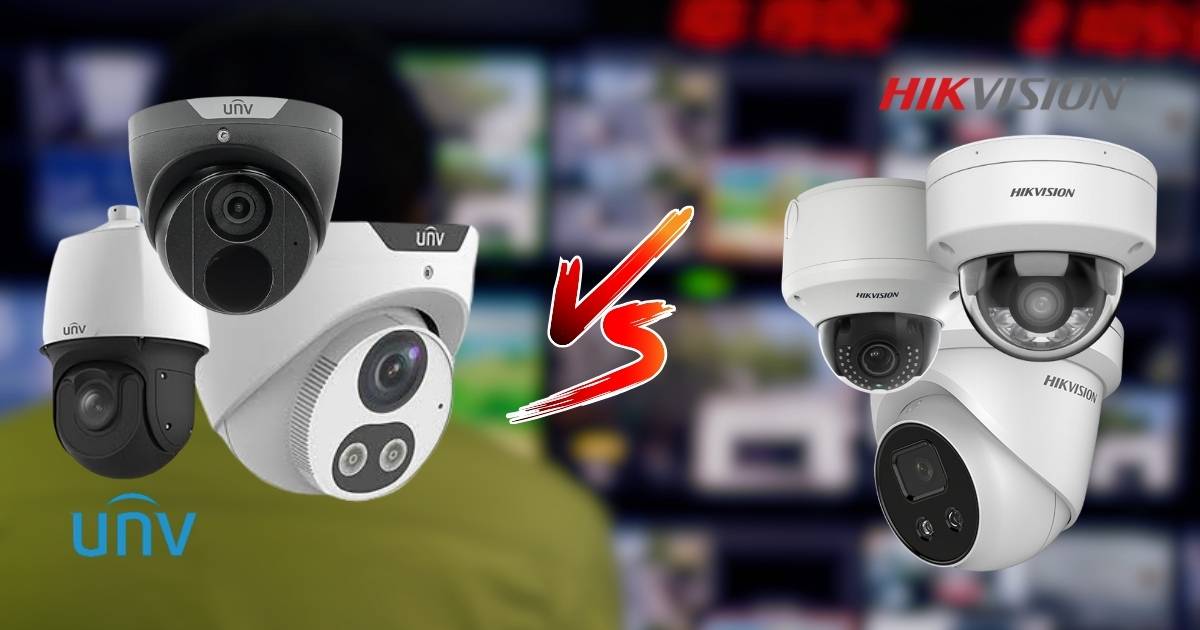
Choosing Your 2026 Surveillance Standard: Uniview vs. Hikvision
This comprehensive guide breaks down the high-stakes rivalry between the global market leader, Hikvision, and the high-growth challenger, Uniview.
by Brandon Scott • March 30, 2026
When businesses evaluate modern video surveillance systems, two brands often dominate the conversation: Uniview (UNV) and Hikvision.
Both companies are well-known Chinese manufacturers of professional surveillance equipment, producing IP cameras, network video recorders (NVRs), and integrated security systems used in commercial, industrial, and infrastructure deployments worldwide.
Hangzhou Hikvision Digital Technology remains the global market leader in video surveillance, while Zhejiang Uniview Technologies has positioned itself as a major competitor with a strong focus on efficient IP-based video surveillance technology.
This comparison explains the differences between Uniview vs Hikvision security cameras and systems, covering:
- image quality and sensors
- low-light performance
- AI analytics and detection accuracy
- storage efficiency
- compliance requirements
- pricing and system scalability
The goal is to help businesses, security integrators, and installers choose the best surveillance solution for their projects.
Brand Overview: Hikvision and Uniview
Hikvision
Hangzhou Hikvision Digital Technology Co., Ltd. is currently the largest video surveillance manufacturer in the world, with an extensive ecosystem of security cameras, access control devices, alarm systems, and intelligent analytics platforms.
Hikvision security products are widely deployed in:
- retail environments
- transportation infrastructure
- smart cities
- manufacturing facilities
- residential surveillance systems
The company offers a wide variety of camera ranges, including:
- Easy Series cameras
- Pro Series cameras
- ColorVu cameras
- DarkFighter cameras
- PTZ surveillance systems
This massive hardware ecosystem allows Hikvision to deliver technologically sophisticated options for nearly every surveillance scenario.
Uniview (UNV)
Zhejiang Uniview Technologies, commonly known as Uniview or UNV, is recognized as one of the pioneers of IP-based video surveillance systems.
Unlike companies that evolved from analog CCTV systems, Uniview focused early on network cameras and digital video surveillance infrastructure.
Uniview’s product ecosystem includes:
- IP cameras
- network video recorders (NVRs)
- video management systems
- access control solutions
- intelligent analytics platforms
In recent years, Uniview has gained strong adoption among installers thanks to technologies such as:
- Ultra 265 compression
- Wise-ISP
- LightHunter low-light technology
- Smart Intrusion Prevention analytics
These innovations allow Uniview cameras to deliver high-quality footage with lower bandwidth and storage requirements, making them attractive for businesses seeking affordable yet high-performance security systems.
Uniview vs Hikvision: Quick Comparison
| Feature | Uniview (UNV) | Hikvision |
|---|---|---|
| Company | Zhejiang Uniview Technologies | Hangzhou Hikvision Digital Technology |
| Core Strength | Efficient IP surveillance systems | Massive global ecosystem |
| Low-Light Technology | LightHunter | ColorVu / DarkFighter |
| AI Detection | Smart Intrusion Prevention (SIP) | AcuSense deep learning |
| Storage Compression | Ultra 265 | H.265+ |
| Compliance Options | NDAA-compliant models available | Restricted in US federal projects |
Both brands provide advanced CCTV cameras and network camera systems, but their strengths vary depending on deployment needs.
Image Quality Comparison
Image quality is one of the most important aspects of any security camera system.
Several factors influence how well a surveillance camera performs:
- image sensors
- lens quality
- image signal processing (ISP)
- compression algorithms
- lighting conditions
Most modern IP cameras from both Hikvision and Uniview support resolutions such as 4MP, 8MP (4K), and higher, allowing systems to capture highly detailed images for identification and investigation.
Uniview Image Quality
Uniview cameras focus on delivering balanced image processing and efficient storage performance.
A key component is Wise-ISP technology, which improves camera performance in strong backlight environments by maintaining detail in both bright and dark areas of the image.
Another major advantage is LightHunter technology, which enhances image clarity in low light conditions without relying heavily on internal illumination.
This allows Uniview cameras to capture usable footage even in near-virtual darkness.
Key advantages of Uniview imaging include:
- balanced color reproduction
- improved detail in dim environments
- efficient bitrate usage through Ultra 265 compression
These features make Uniview cameras particularly effective for large surveillance systems where storage efficiency and reliability matter.
Hikvision Image Quality
Hikvision cameras emphasize sharpness and high contrast imaging, which helps produce detailed images with strong edge definition.
Two key technologies include:
ColorVu Cameras
ColorVu cameras are designed to capture full-color images at night using built-in warm light illumination.
This technology works well when color identification is critical, such as:
- retail security
- parking areas
- building entrances
DarkFighter Technology
DarkFighter cameras improve visibility in extremely low light environments by using highly sensitive sensors and advanced processing algorithms.
In environments where illumination is acceptable, ColorVu cameras often deliver bright, vivid nighttime images.
Low-Light and Night Surveillance
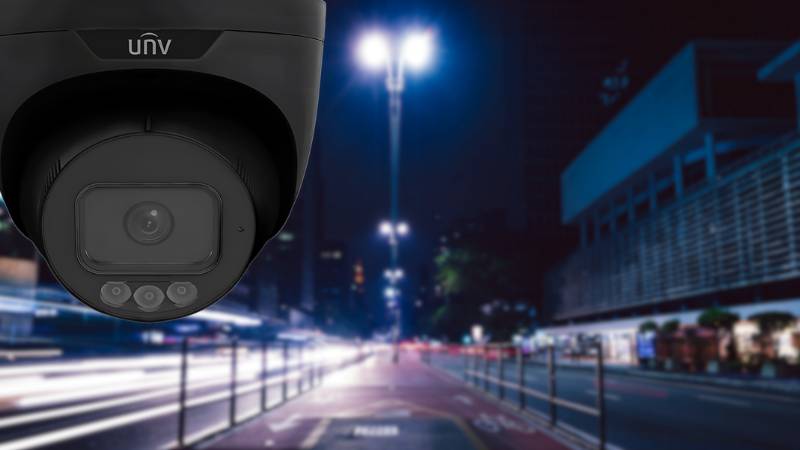
Night performance is essential for security systems installed in environments such as:
- warehouses
- parking lots
- construction sites
- building perimeters
Uniview Night Performance
Uniview’s LightHunter technology improves sensitivity to ambient light, allowing cameras to capture clear images without excessive digital noise.
Some Uniview cameras also include TriGuard deterrence features, combining:
- flashing lights
- audio alerts
- motion detection
These deterrence features help prevent incidents before they occur.
Hikvision Night Performance
Hikvision provides several nighttime imaging technologies, including:
- ColorVu for full-color night images
- DarkFighter for enhanced low-light sensitivity
- DarkFighterX dual-sensor imaging systems
Each technology is designed to improve visibility in different night surveillance scenarios.
AI Analytics and Smart Detection
Artificial intelligence has become an essential feature in modern video surveillance systems.
Both Uniview and Hikvision cameras support AI analytics that help:
- detect motion
- classify humans and vehicles
- reduce false alarms
Uniview AI Features
Uniview cameras include Smart Intrusion Prevention (SIP) technology.
This system focuses on accurately filtering humans and vehicles, which significantly reduces false alerts caused by environmental movement.
SIP works best when deployed within a full Uniview ecosystem, where UNV cameras and NVRs process analytics together.
Other Uniview analytics include:
- people counting
- perimeter detection
- behavior analysis
Hikvision AI Features
Hikvision offers advanced AI detection features through its AcuSense platform.
AcuSense technology supports:
- human and vehicle detection
- facial recognition capabilities
- deep learning analytics
One advantage of Hikvision AI systems is strong third-party integration, allowing cameras to connect with alarm monitoring systems and security management platforms.
Hybrid Light Trend (2025–2026)
A major innovation across the surveillance industry is the rise of Smart Hybrid Light cameras.
Traditional cameras forced users to choose between:
- infrared mode (black and white footage)
- white light mode (color night footage)
Hybrid Light cameras combine both approaches.
These cameras operate in infrared mode during normal monitoring and automatically activate white light illumination when a person or vehicle is detected.
This allows cameras to:
- capture color evidence when necessary
- deter intruders using visible light
Both Uniview and Hikvision now offer Hybrid Light technology in mid-range and professional cameras.
Storage Efficiency Comparison
Storage efficiency is an important consideration for large surveillance systems.
Uniview’s Ultra 265 compression technology is slightly more aggressive than Hikvision’s H.265+ compression.
In many real-world deployments, Ultra 265 can provide:
Yes, many Uniview cameras and NVR systems are NDAA compliant, which means they can be used in projects that require compliance with U.S. federal security regulations. This makes Uniview a common choice for government contractors, regulated industries, and organizations that must meet strict procurement requirements.
- lower bandwidth usage
- longer recording retention
- reduced hard drive requirements
In high-motion environments, Uniview systems may achieve 10–15% better compression efficiency, which can be significant when storing 30 days or more of 4K footage.
Compliance and Regulatory Considerations
Regulatory compliance has become increasingly important in the surveillance industry.
Under the US National Defense Authorization Act (NDAA), certain manufacturers are restricted from federal projects.
Hikvision equipment is included in these restrictions.
As a result, many organizations looking for compliant surveillance solutions have turned to NDAA-compliant alternatives, including Uniview camera systems designed for regulated deployments.
This compliance factor has contributed to Uniview’s growth in government, infrastructure, and contractor installations.
Which Security System Should You Choose?
Both Hikvision and Uniview security cameras provide powerful surveillance capabilities.
However, the best choice depends on your project requirements.
Choose Uniview if you want
- NDAA-compliant camera systems
- efficient storage through Ultra 265 compression
- strong performance in low light environments
- reliable surveillance at competitive pricing
Choose Hikvision if you want
- the largest hardware ecosystem available
- advanced AI integrations with third-party systems
- specialized surveillance hardware such as thermal cameras or ultra-long-range PTZ systems
Conclusion
There is no single answer when comparing Uniview vs Hikvision CCTV cameras.
Both companies provide advanced security cameras and video surveillance solutions capable of protecting businesses and infrastructure.
However, in recent years Uniview has become increasingly popular among installers and security integrators, thanks to its combination of:
- strong image quality
- efficient compression technology
- reliable low-light performance
- competitive pricing
For businesses seeking a professional IP-based security system, Uniview offers a powerful balance of performance, efficiency, and affordability. Choose Esentia Systems for your UNV upgrade and discover the right cameras, NVRs, and support for a smarter security deployment.
FAQs
Why is Uniview better than Hikvision?
Uniview is often better for businesses that want efficient storage, strong low-light performance, and NDAA-compliant options. Its Ultra 265 compression reduces bandwidth and storage use, while LightHunter technology improves image quality in low light. For many installers, Uniview offers a better balance of performance, compliance, and value.
What is the main difference between Uniview and Hikvision cameras?
The main difference between Uniview and Hikvision security cameras lies in their technology focus. Uniview emphasizes efficient compression (Ultra 265), balanced image processing, and cost-effective IP surveillance systems, while Hikvision focuses on a broader security ecosystem with specialized cameras, deep-learning analytics, and technologies like ColorVu and DarkFighter for night imaging.
Are Uniview cameras NDAA compliant?
Yes, many Uniview cameras and NVR systems are NDAA compliant, which means they can be used in projects that require compliance with U.S. federal security regulations. This makes Uniview a common choice for government contractors, regulated industries, and organizations that must meet strict procurement requirements.
Which brand performs better in low light: Uniview or Hikvision?
Both brands perform well in low light but use different technologies. Uniview’s LightHunter technology is designed to capture detailed images in extremely dim environments without relying heavily on illumination. Hikvision’s ColorVu cameras use warm white light to produce full-color images at night, which can provide brighter nighttime footage when lighting is acceptable.
Why do many installers choose Uniview cameras?
Many installers choose Uniview security cameras because they offer a strong balance of performance, reliability, and affordability. Features such as Ultra 265 compression, LightHunter low-light imaging, and Smart Intrusion Prevention analytics help businesses deploy professional surveillance systems while reducing storage costs and improving detection accuracy.
overall rating:
my rating:
log in to rate